Let’s be honest – most people think about decoration only when they want to feel better at home. But there’s a whole other angle that not enough people consider : decorating strategically to increase the value of your property. Whether you’re planning to sell, rent, or simply want your home to be worth more on paper, the way you arrange and style your interior matters. A lot.
And frankly, it’s not as complicated as it sounds. You don’t need to hire an architect or gut-renovate your kitchen. Sometimes it’s really just about knowing where to focus. If you’re also navigating the real estate side of things, a resource like https://www.mon-expert-immo.fr can give you solid context on what buyers and renters actually look for in a property – which, spoiler alert, aligns pretty well with what we’re about to cover here.
First Impression Is Everything – And It Starts at the Door
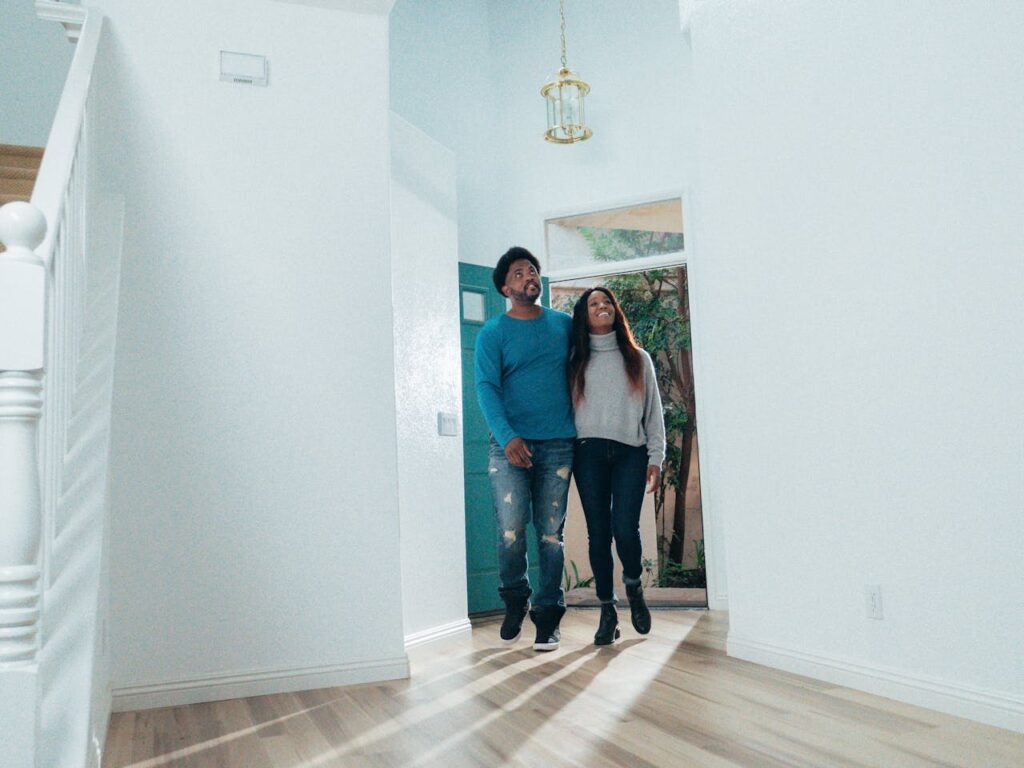
 You’ve heard it before, but it bears repeating : people make up their mind about a space within seconds. That’s not a figure of speech, it’s how our brains work. The entrance, the hallway, the first thing visible from the front door – these set the tone for everything else.
So what does that mean practically ? Clear the clutter. Seriously. A coat rack overflowing with jackets, shoes piled up, a small rug that’s seen better days – all of that creates an immediate feeling of chaos. It’s not about making your home look like a hotel lobby. It’s about creating breathing room.
A clean, well-lit entrance with one or two intentional decorative elements – a mirror to open up the space, a plant, a simple console – signals immediately that the rest of the home is thoughtful and cared for.
Neutral Doesn’t Mean Boring : The Case for a Calm Color Palette
This one divides people. I get it – you love your deep burgundy living room wall, and honestly, maybe it looks great. But the second you want your home to appeal to a wider audience, bold personal choices become obstacles.
Neutral tones – warm whites, soft greiges, light stone shades – are not a compromise. They’re actually a smart strategy. They make spaces feel larger, brighter, and easier for visitors to project themselves into. And that projection ? That’s what leads to emotional connection. That’s what makes someone say “I can see myself living here.”
Does that mean every wall needs to be white ? No. But it means being honest about which choices are for you, and which choices serve the home’s appeal.
Light : The Single Most Underrated Element in Interior Design
If there’s one thing that consistently surprises people when they start thinking about it, it’s how much lighting changes a room. Not just natural light – though that’s gold and should never be blocked unnecessarily – but the layering of artificial light.
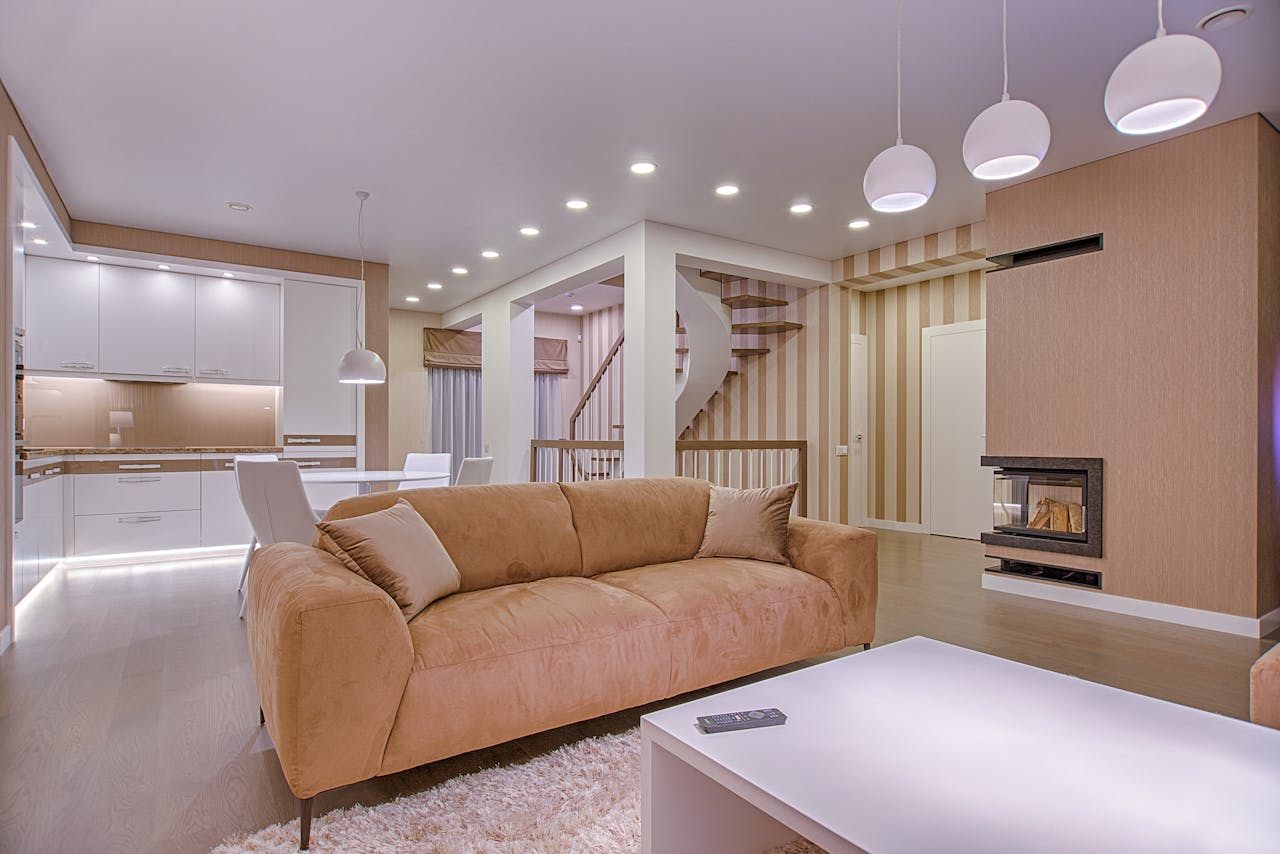
A single ceiling light in the center of a room creates flat, unflattering ambiance. It’s functional, sure. But it does nothing for atmosphere. Compare that to a combination of floor lamps, wall sconces, and a pendant light over a dining table – suddenly the room has depth, warmth, and a sense of intention.
For resale or rental value, well-lit spaces photograph better, feel larger, and leave a stronger impression during visits. It’s one of the cheapest upgrades with one of the highest perceived returns.
Furniture Scale and Flow : Getting the Proportions Right
Here’s a mistake I see constantly : furniture that’s too big for the room. Or the opposite – tiny pieces floating in a space that feels empty and cold.
The scale of your furniture relative to your room is fundamental. A sofa that eats up 80% of a living room doesn’t just look wrong – it makes the entire space feel smaller and harder to move through. Buyers and renters feel that, even if they can’t articulate it.
The rule of thumb ? Leave at least 60 to 90 centimeters of circulation space around major furniture pieces. Keep pathways clear. Make sure each piece of furniture has a clear purpose and a logical place in the room’s flow.
And please – avoid pushing every piece of furniture against the walls. It’s a reflex a lot of people have, thinking it creates more space. It actually does the opposite. Pulling furniture slightly away from walls can make a room feel more intentional and surprisingly more spacious.
The Kitchen and Bathroom Rule : Small Investments, Big Impact
Real estate professionals will tell you this consistently : kitchens and bathrooms sell homes. They’re the two spaces buyers scrutinize the most, and the two spaces where dated or neglected details kill the deal fastest.
You don’t need to renovate. But you do need to pay attention. Replace that tired kitchen faucet. Regrout the bathroom tiles if they’ve gone grey. Swap out old cabinet handles for something more current – matte black, brushed brass, or simple chrome. These details cost almost nothing individually, but together they signal a home that’s been maintained and thought about.
A fresh coat of paint on kitchen cabinets, especially in a current neutral shade, can genuinely transform a space for a few hundred euros. The perceived value jump is disproportionate to the actual cost. That’s the sweet spot you’re always looking for.
Declutter Like You Mean It
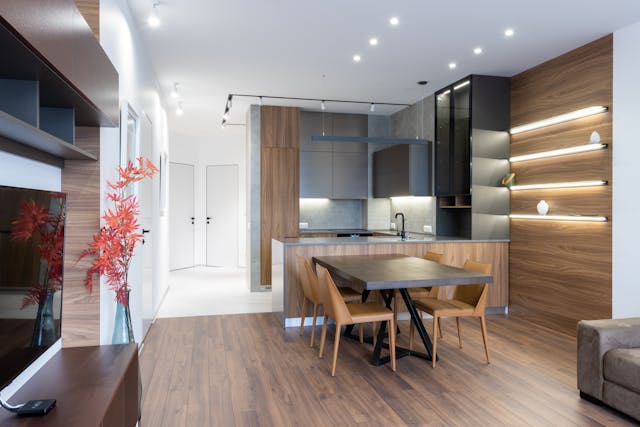 This is the advice nobody wants to hear, but it’s probably the most impactful thing you can do before showing your home or even just to make it feel better to live in : get rid of stuff.
Not everything, obviously. But most homes accumulate objects over time – things that have lost their purpose but not yet found the bin. Decorative items that made sense five years ago. Books you’ll never reread. Furniture that filled a gap but never really belonged.
A home with fewer, better-chosen objects looks more intentional. It photographs better. It feels calmer. And calm, in 2024, is genuinely desirable. People are overwhelmed in their daily lives – they want to come home to a space that doesn’t add to that.
A useful exercise : walk through each room and ask yourself, does this object earn its place ? If the answer is uncertain, it probably doesn’t.
Styling Touches That Make the Difference
Once the big things are sorted – layout, light, color – the finishing touches are where you can have a bit of fun. And these details matter more than people think.
A well-placed throw on a sofa. A cluster of different-height candles on a shelf. Fresh or high-quality artificial plants (no, not the dusty silk ones from 2003). A large mirror that reflects light and visually doubles a space. Art that feels coherent with the room rather than randomly hung.
None of these are expensive. All of them are intentional. And intentionality is exactly what gives a home its sense of value – that feeling that someone has thought about this space, that it’s been curated rather than just accumulated.
That’s ultimately the mindset shift worth making. Stop thinking of decoration as something you do for yourself alone, and start thinking of it as an investment in the space itself. Your home can be both a place you love and a property that holds – or grows – its value. Those two goals are not in conflict. In fact, done well, they’re the same thing.